Meet The Owner
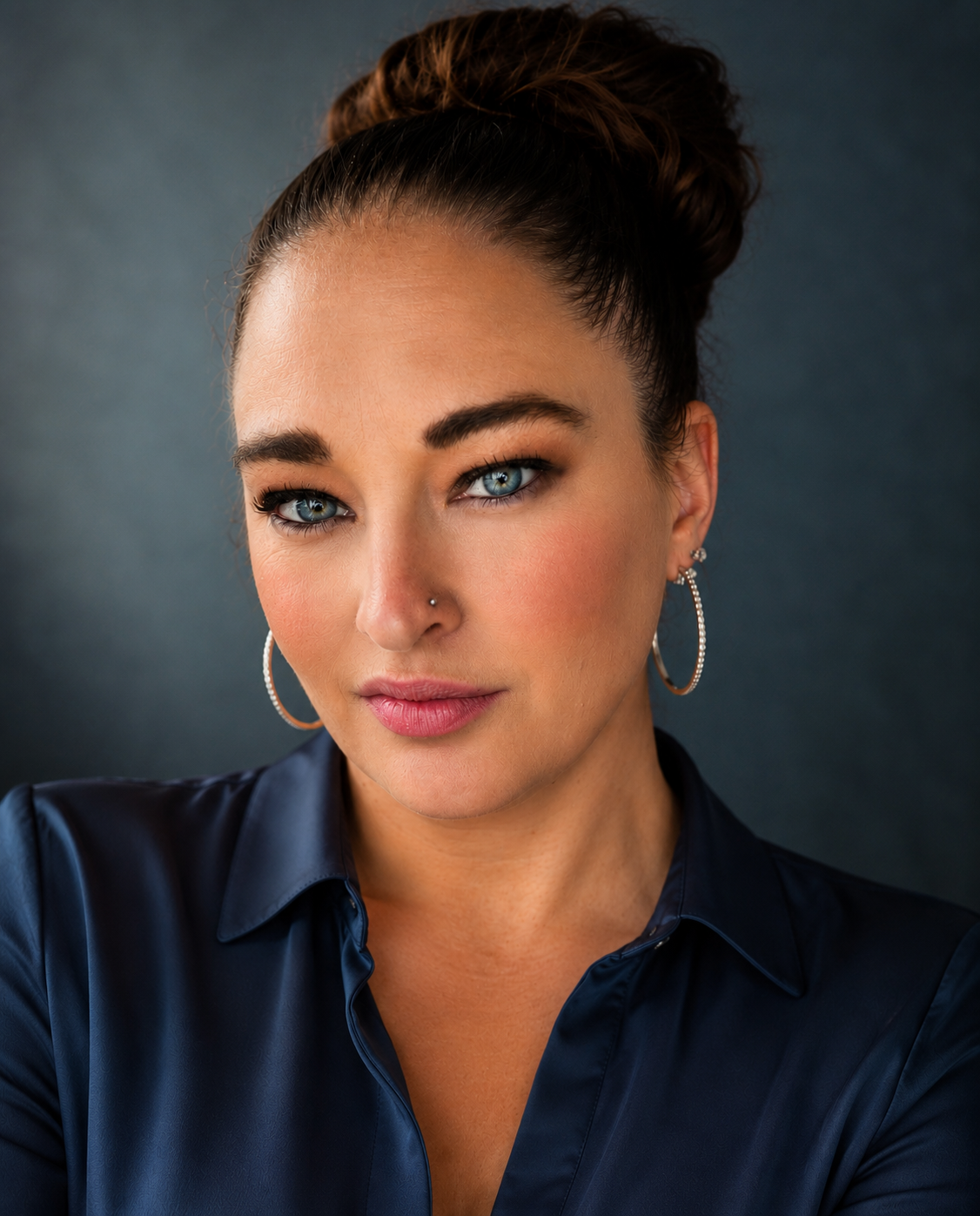
Hello!My name is Michelle Velazquez, CNC, CNPC.
Special Education Advocate | Educational Consultant | Master IEP Coach® | Certified Neurodiversity Coach | Certified Neuropsychology Coach
I bring five years of direct special education advocacy experience grounded in real classrooms, real IEPs, real evaluations, and real students. Through Michelle’s Special Education Advocacy, I work with families, young adults, educators, therapists, service providers, and school districts to strengthen educational planning, identify barriers, protect student and parent rights, and improve access, participation, and meaningful progress.
My professional training includes Advanced Special Education Leadership, as well as multiple recognitions for Collaborative Special Education Leadership through the Master IEP Coach® network, where I have been recognized as an Idea Bringer, Solution Finder, and Team Builder within the IEP process.
My work is further informed by my credentials as a Certified Neurodiversity Coach and Certified Neuropsychology Coach. I help individuals and families make practical connections between existing evaluation findings, observed patterns, and everyday functioning; identify questions or gaps that warrant further exploration; and translate available information into practical strategies and supports. This work is non-clinical. It does not include diagnosing or replacing psychological, neuropsychological, medical, or educational evaluations. I bring a leadership-centered, neurodiversity-informed perspective to complex educational situations. I understand that meaningful advocacy requires more than knowing special education requirements. It requires the ability to see the whole student, understand the systems around them, communicate effectively, and keep the work focused on educational access, meaningful progress, and student and parent rights.
I specialize in supporting students with Autism Spectrum Disorder, ADHD, cognitive Impairments, specific learning disabilities, sensory processing needs, behavior and regulation challenges, and executive functioning needs. My work focuses on understanding how those areas affect learning, communication, regulation, participation, and day-to-day school performance.
My advocacy work is strengthened by my training. Together, they shape how I understand what may be happening beneath the surface when a student is struggling and how I translate that understanding into clear educational needs, questions, supports, implementation strategies, and advocacy priorities.
Neurodiversity coaching keeps the focus on the whole student. Rather than viewing a student primarily through academic performance, compliance, diagnosis, or observable behavior, I consider how neurological differences, communication, regulation, executive functioning, sensory processing, individual learning and processing patterns, and environmental demands may affect access and participation. I ask families and educational teams to look beyond, “What is wrong with this student?” and instead ask, “What is this student experiencing, what may be getting in the way, and what support could help?”
My non-clinical neuropsychology-informed coaching helps individuals, families, and educational teams connect existing evaluation findings, observed patterns, and everyday functioning. I help make sense of patterns involving attention, memory, processing, executive functioning, regulation, sensory experiences, communication, and other areas of cognitive functioning across school, home, community, and workplace settings. This may include explaining assessment information, identifying patterns or gaps that warrant further exploration, developing questions for qualified providers or educational teams, and translating available information into practical strategies and supports. This work does not include diagnosing or replacing psychological, neuropsychological, medical, or educational evaluations.
That is where this connects directly to my role as an advocate. I use the information already available across environments—including educational records, educational and medical evaluations, observations, reported experiences, functional performance, and environmental demands—to identify missing connections, clarify what may be interfering with access, and determine what needs to happen next.
That may mean strengthening an IEP, clarifying accommodations, reviewing behavior, antecedents, and regulation supports, requesting additional information, improving implementation, preparing for a meeting, or ensuring the student’s needs and rights are not overlooked. When concerns cannot be resolved through collaboration and stakeholder communication, I also support families with formal written correspondence to school districts in accordance with applicable federal and state special education requirements.
My perspective is also shaped by lived experience. As a former special education student and a parent of autistic children, including a child with cognitive impairment, I understand how frustrating it can be when a progress report says “making adequate progress,” but a family can see that something is still not working. I use that lived experience alongside my professional training to serve as a bridge instead of a wedge.
Understanding the Whole Student. Protecting What Matters
What sets my work apart is how I apply this understanding in real situations. I do not approach IEPs as a checklist or a legal script. I approach them as working systems—where communication, data, implementation, team dynamics, student needs, and educational outcomes are all connected.
My advocacy brings together special education knowledge, neurodiversity-informed practice, and non-clinical neuropsychology-informed coaching. That perspective allows me to recognize when the full picture is not being seen and to help families move from a general sense that something is wrong to a clear, informed path forward.
I translate parent concerns into language that schools can understand and act on. I connect the student’s experience, behavior, educational impact, and need for support so that the conversation stays centered on what the student requires to access their education and make meaningful progress.
I do not manufacture conflict, and I do not minimize concerns simply to make a meeting more comfortable. I bring calm authority to complicated situations, keep communication productive, and help families protect their child’s needs and rights without losing sight of the long-term relationship with the school team.
Collaboration is valuable and pursued when appropriate, but it does not take priority over the student’s individual needs, educational access, meaningful progress, or the protection of student and parent rights. My role is to make sure the student’s needs are understood, the family’s voice is clear, and the next steps are grounded in both facts and purpose.
For Parents and Families
My work with parents is about turning overwhelm into clarity and emotion into a plan. We look at evaluations, diagnoses, behavior logs, progress reports, services, accommodations, and school communication together. I help you understand what the information means, what may be missing, what questions need to be asked, and what actions can move the situation forward.
I support families preparing for initial evaluations, reviewing existing IEPs, addressing unmet needs, preparing for IEP and school meetings, navigating difficult school communication, and planning for post-secondary education or workplace transitions.
When behavior, anxiety, sensory overload, executive functioning challenges, or “we are not sure what else to try” start to drive the school day, I bring clarity—not chaos. Parents often come to me when their gut says something is still off, even though the paperwork does not fully explain why. My job is to identify what may be getting missed and turn that concern into an educational response the school team can understand and address.
You do not have to choose between staying silent and going to war with the school. There is another way forward: conversations rooted in facts, framed with care, and delivered with calm authority.
For Schools and Districts
I am also the author and founder of the Stimulation Profile System—a classroom-tested framework designed to help teams understand behavior, regulation, sensory needs, and executive functioning before challenges escalate into crisis.
The Stimulation Profile System helps teams move beyond surface-level descriptions such as “refusal,” “defiance,” or “non-participation” and examine what may be happening in the interaction between the student, the task, the environment, and the supports available. It gives adults a clearer framework for documenting patterns, identifying barriers, and developing responses that are both realistic and responsive.
My work with schools and districts is about refinement and fidelity. I provide professional development, consultation, student-specific problem-solving, and Stimulation Profile System coaching to help leadership and staff develop more consistent, informed, and student-centered special education practices.
I help teams reframe “defiance,” “refusal,” and “non-participation” as signals that something may not be working—without erasing expectations, accountability, or the student code of conduct. I support staff in understanding how regulation and executive functioning can show up through behavior, attendance, work completion, shutdowns, communication, and engagement.
Through targeted consultation and the Stimulation Profile System, I help districts make documentation more accurate, plans more responsive, and IEP conversations more aligned and productive. Staff should not be left to guess their way through complex behavior without clear systems, consistent tools, and realistic expectations.
I believe students should not have to mask, white-knuckle, or collapse their way through the school day because adults did not yet have the language or framework to support them differently. I also believe accountability, support, and understanding can coexist.
This is what I bring to the table. This is what I do every day.
I turn insight into action and behavior into a story the whole team can finally understand—so the student at the center of all of this can get what they need.
Public Articles
-
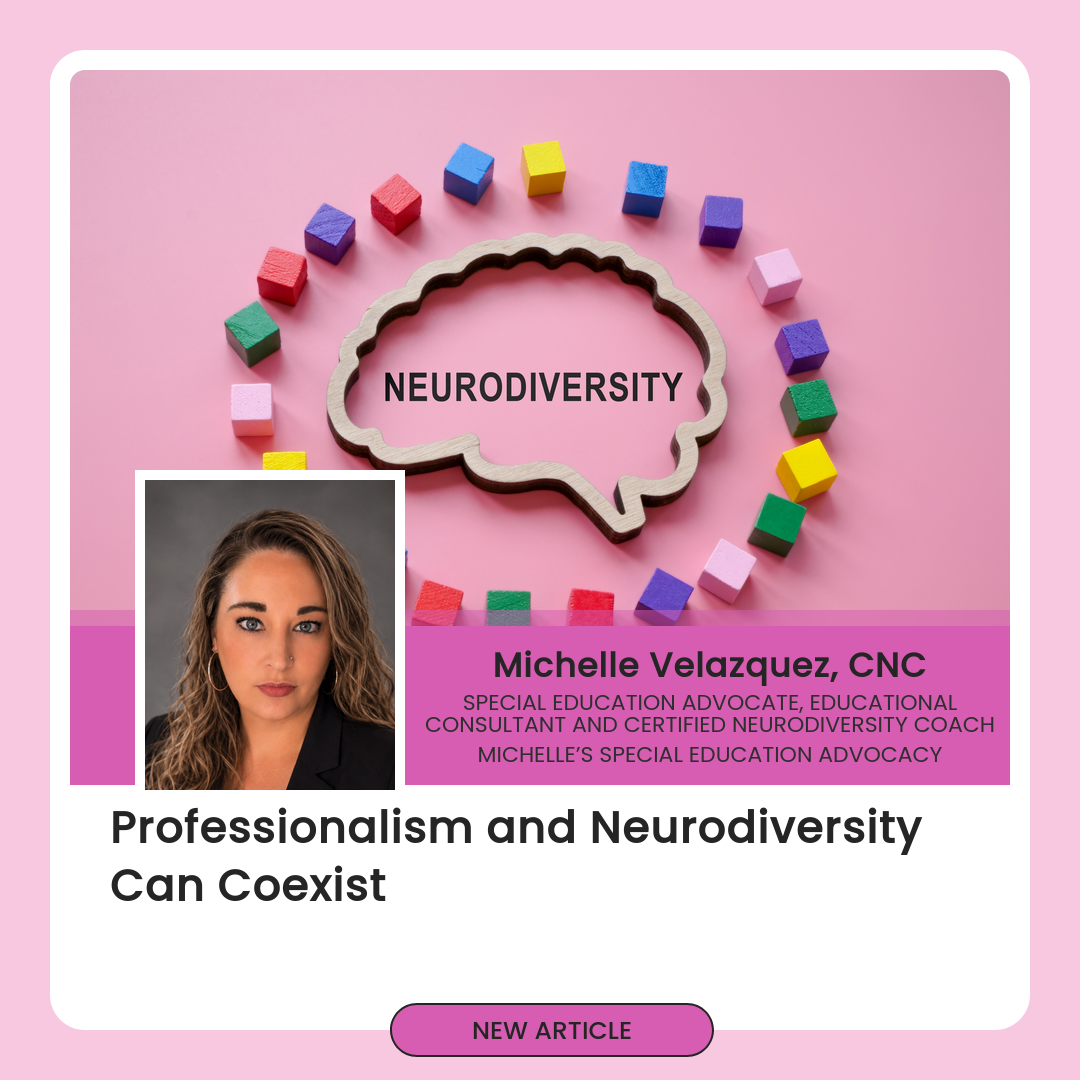
![A digital graphic design promoting an article about neurodiversity and professionalism coexisting. The background is pink, with colorful blocks arranged in a semi-circle around a wooden brain-shaped outline with the word "NEURODIVERSITY" inside. A photo of Michelle Velazquez, a woman with long, wavy hair, appears in the lower left corner. Text on a purple banner introduces her as a CNC, special education advocate, and neurodiversity coach. The headline reads "Professionalism and Neurodiversity Can Coexist" and a pink button at the bottom says "New Article."]()
Explore how neurodivergent professionals can leverage their unique cognitive strengths in the workplace by understanding themselves and creating inclusive environments that value different ways of thinking.
-
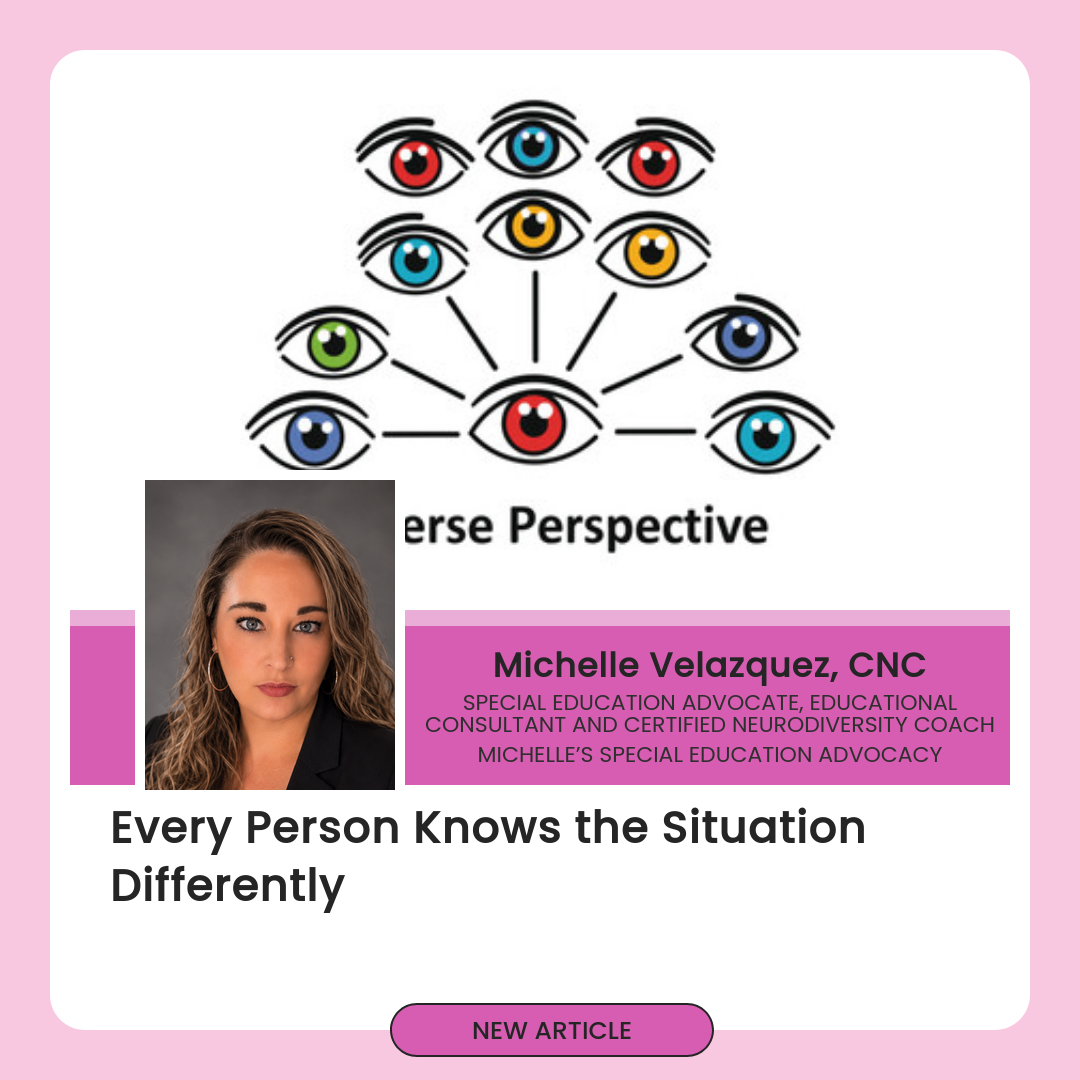
![A graphic with multiple colorful eyes connected to a central eye, displaying the concept of different perspectives. Below is a professional headshot of Michelle Velazquez, along with her title and credentials as a CNC and special education advocate. The graphic includes the text: 'Every Person Knows the Situation Differently' and a button labeled 'New Article'.]()
A thoughtful exploration of how different perspectives on the same situation shape leadership decisions. This article examines why people arrive at different conclusions and how understanding others' viewpoints leads to better outcomes.
-
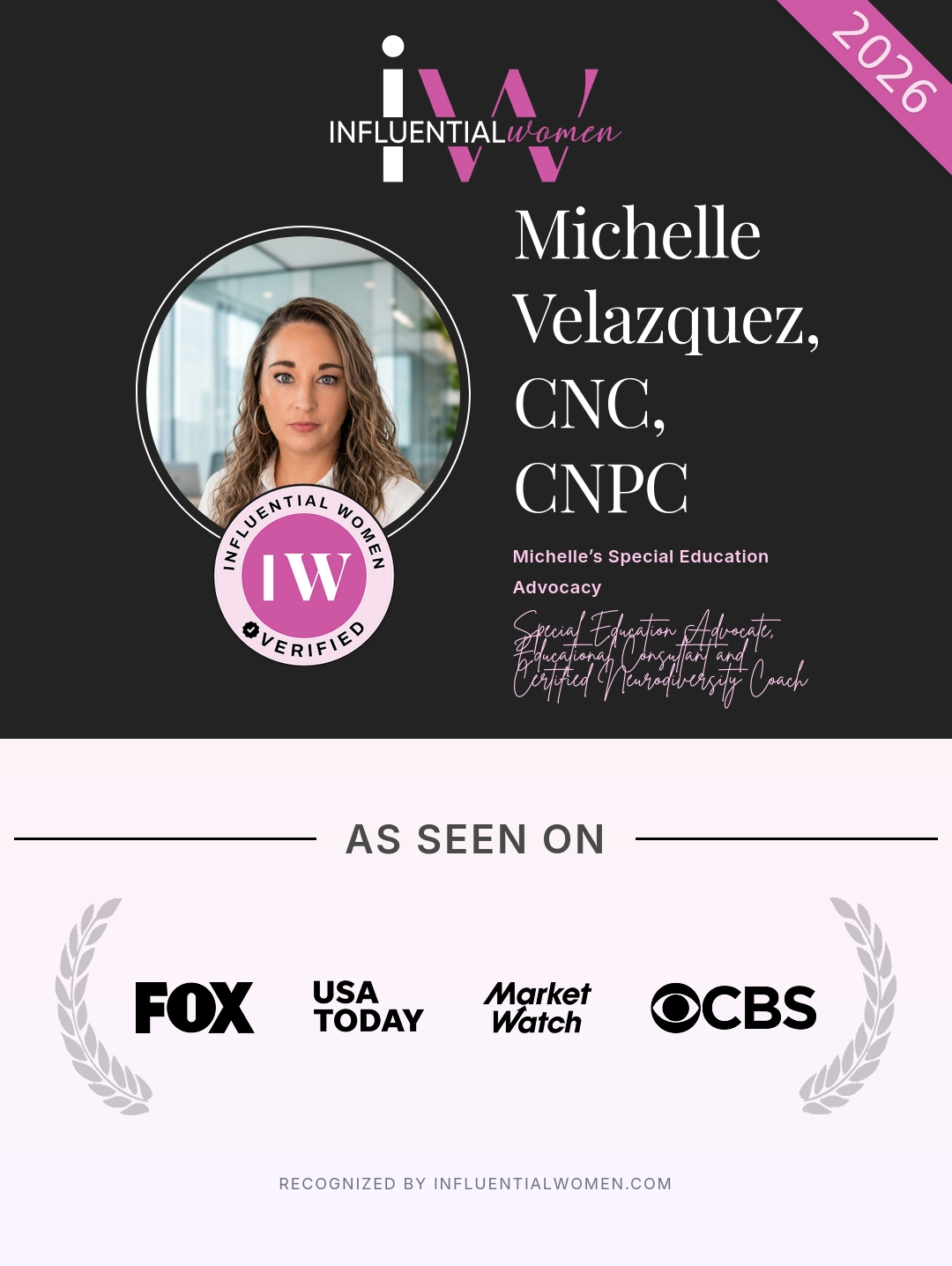
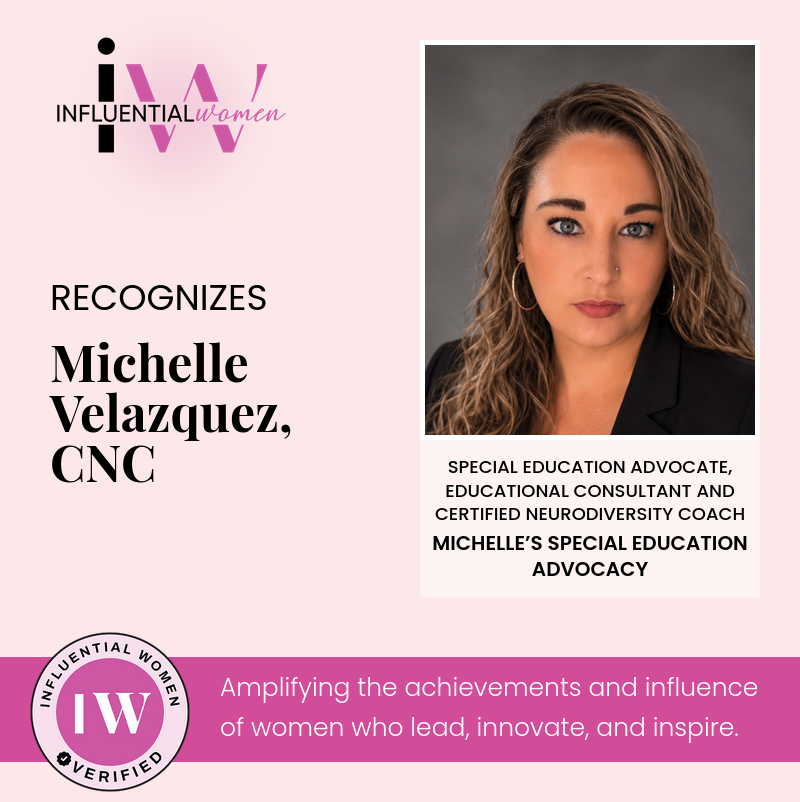
![Recognition of Michelle Velazquez, CNC, as a special education advocate, educational consultant, and neurodiversity coach, with a portrait photo of her, IW Influential Women logo, and a pink banner with the quote about empowering women.]()
Influential Women Recognition and Credentials
-
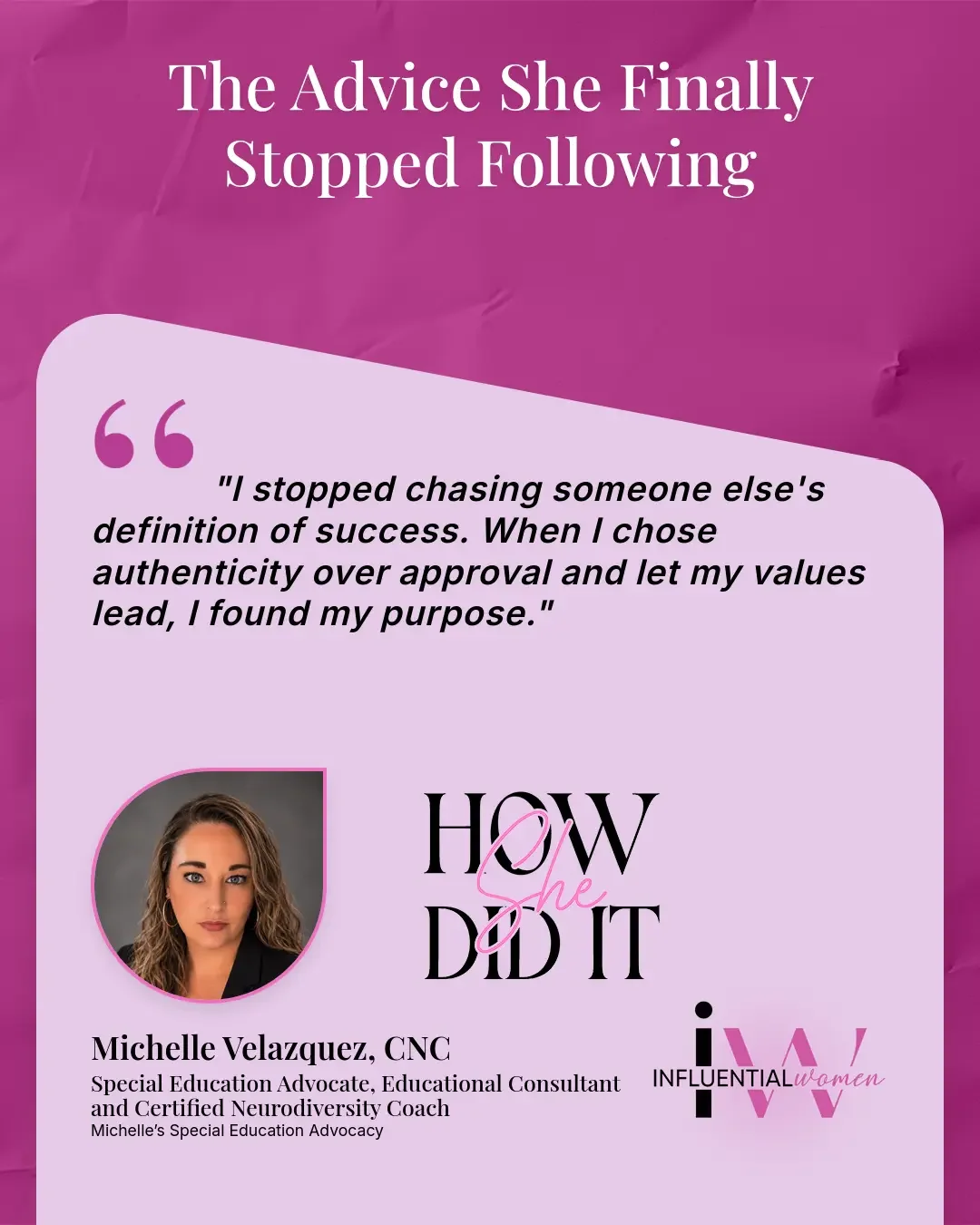
![A motivational quote card with a purple background that features a quote about success and authenticity. It includes a headshot photo of Michelle Velazquez, CNC, and her professional titles. The card has text that reads, 'The Advice She Finally Stopped Following' and 'How She Did It' with a stylized pink script.]()
-
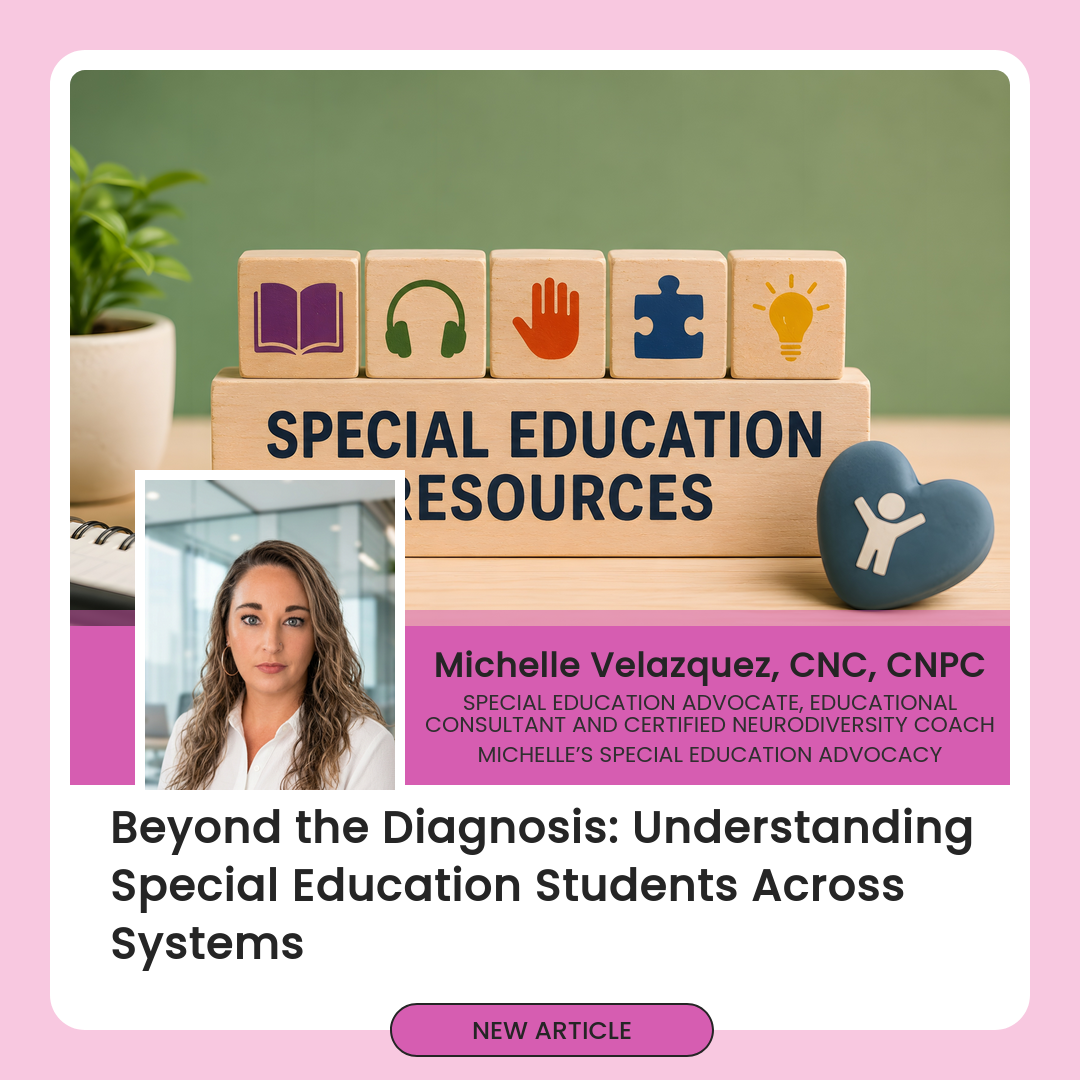
![]()
Bridging the gap between medical and educational systems to support students with disabilities through collaboration, clear communication, and understanding behavior as communication rather than defiance.

My role is to help you feel clear, supported, and confident in the decisions you are making for your child.
If things feel scattered, overwhelming, or not adding up, this is where we slow it down and start making sense of what is actually happening—so you can move forward with direction, not guesswork.
You do not need perfect words. You do not need to have everything figured out.
You just need a starting point.
This is a real conversation focused on your child, your concerns, and what comes next.
You can contact me directly, and I will respond within 2 business days:
Email:mvelazquez@michellesspedadvocacy.org
Phone:(314) 445-9639
All calls are confidential. Your information remains private.